
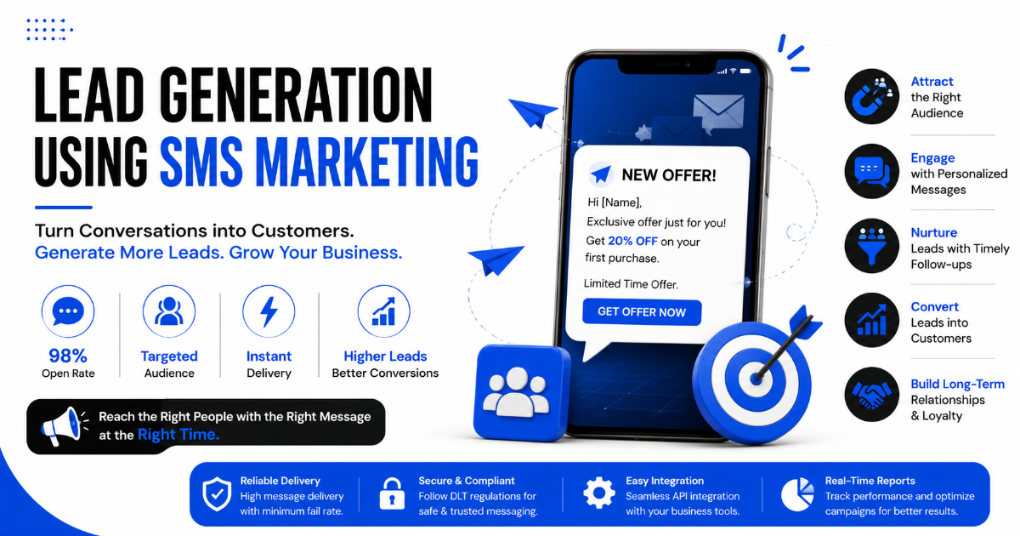
Lead Generation Using SMS Marketing: A Complete Guide to Growing Your Business
Generating quality leads is one of the biggest challenges for businesses today. While digital marketing channels such as search engines and social media continue to evolve, SMS marketing remains one of the most effective ways to reach potential customers instantly. With high open rates, quick delivery, and direct communication, SMS marketing helps businesses capture, nurture, and convert leads more efficiently.
Whether you run a startup, retail store, educational institution, healthcare organization, real estate agency, or e-commerce business, SMS marketing can become a valuable part of your lead generation strategy.
In this guide, we'll explore how SMS marketing drives lead generation, best practices for creating high-converting campaigns, and how businesses can maximize results.
What is Lead Generation?
Lead generation is the process of attracting potential customers who have shown interest in your products or services. A lead can be someone who:
Signs up for your newsletter
Requests a product demo
Downloads a brochure
Registers for a webinar
Fills out a contact form
Calls your business
Responds to a promotional campaign
The goal is to convert these prospects into paying customers through timely and relevant communication.
Why SMS Marketing is Powerful for Lead Generation
SMS marketing provides a direct line of communication with your audience. Unlike many digital channels where messages may go unnoticed, text messages are typically viewed shortly after delivery.
Benefits include:
Fast message delivery
High message visibility
Simple and concise communication
Excellent customer engagement
Cost-effective marketing
Easy campaign management
Suitable for businesses of all sizes
Because SMS is immediate, it works well for time-sensitive promotions, reminders, and lead nurturing.
Benefits of SMS Marketing for Lead Generation
1. Reach Customers Instantly
SMS messages are delivered within seconds, allowing businesses to communicate offers, updates, or invitations at the right moment.
Examples include:
Limited-time discounts
New product launches
Event registrations
Appointment bookings
Exclusive offers
2. Improve Customer Engagement
Customers appreciate relevant and timely communication. SMS enables businesses to share concise messages that encourage action.
Engaging SMS campaigns can include:
Promotional offers
Loyalty rewards
Personalized recommendations
Product updates
Customer surveys
Regular engagement helps build trust and encourages customers to interact with your business.
3. Generate High-Quality Leads
Businesses can use SMS campaigns to encourage customers to:
Visit a landing page
Request a callback
Schedule a consultation
Download a brochure
Register for an event
Claim a special offer
Adding a clear call-to-action (CTA) increases the chances of converting interested prospects into qualified leads.
4. Personalize Customer Communication
Personalized messaging creates a better customer experience.
Examples include:
Greeting customers by name
Sending location-based offers
Recommending relevant services
Sharing exclusive discounts
Sending renewal reminders
Personalization makes messages more relevant and improves customer response.
5. Nurture Leads Automatically
Lead generation doesn't stop after the first interaction. Businesses can automate follow-up messages to keep prospects engaged.
Examples include:
Welcome messages
Product information
Reminder notifications
Appointment confirmations
Feedback requests
Automation helps maintain consistent communication without increasing manual effort.
Industries That Benefit from SMS Lead Generation
Education
Educational institutions can use SMS to promote admissions, course launches, counseling sessions, scholarship updates, and seminar registrations.
Healthcare
Hospitals and clinics can generate leads by promoting health check-up packages, appointment bookings, wellness programs, and vaccination drives.
Real Estate
Builders and property consultants can use SMS to promote new projects, open house events, virtual tours, and site visit scheduling.
Retail
Retail businesses can attract customers through seasonal offers, festive sales, loyalty rewards, and new product announcements.
E-commerce
Online stores can drive traffic by sending exclusive discount codes, product launch alerts, flash sale notifications, and abandoned cart reminders.
Financial Services
Banks, insurance providers, and financial institutions can use SMS to promote loan offers, investment plans, credit card services, and financial consultations.
Best Practices for SMS Lead Generation
Build a Permission-Based Contact List
Always send messages to customers who have agreed to receive communications. Permission-based marketing helps build trust and improves campaign performance.
Keep Messages Short and Clear
SMS works best when messages are concise.
Include:
Customer name (if applicable)
Value proposition
Clear CTA
Contact information or website
Personalize Every Campaign
Segment your audience based on:
Interests
Location
Purchase history
Customer behavior
Industry
Demographics
Relevant communication often leads to better engagement.
Include a Strong Call-to-Action
Encourage customers to take the next step.
Examples:
Book Now
Register Today
Get Your Free Demo
Claim Your Offer
Schedule a Consultation
Learn More
Schedule Messages at the Right Time
Send campaigns during business hours or when your audience is most likely to engage. Avoid sending promotional messages late at night or too frequently.
Track Campaign Performance
Measure key metrics such as:
Delivery rate
Click-through rate
Response rate
Lead conversions
Customer engagement
Return on investment (ROI)
Analyzing results helps improve future campaigns.
Common SMS Marketing Mistakes to Avoid
Sending messages without customer consent
Using generic, non-personalized content
Sending too many promotional messages
Ignoring campaign analytics
Not testing campaigns before launch
Using unclear or weak calls-to-action
Failing to segment audiences
Sending outdated offers
Avoiding these mistakes can improve campaign effectiveness and customer trust.
Combining SMS with Other Marketing Channels
SMS marketing becomes even more effective when integrated with other communication channels, such as:
Email marketing
WhatsApp Business
Social media campaigns
Landing pages
CRM systems
Mobile applications
An omnichannel approach ensures customers receive a consistent experience across multiple touchpoints.
How Businesses Can Scale Lead Generation with SMS
As businesses grow, SMS marketing can support larger campaigns through:
Automated workflows
Bulk SMS campaigns
Customer segmentation
API integrations
Campaign scheduling
Real-time reporting
These capabilities help businesses manage communication efficiently while maintaining a personalized customer experience.
Why Businesses Continue to Invest in SMS Marketing
SMS remains a reliable communication channel because it is fast, accessible, and easy to use. Businesses across industries rely on SMS to:
Build customer relationships
Share important updates
Promote products and services
Generate qualified leads
Improve customer engagement
Support sales and marketing efforts
When combined with automation and analytics, SMS becomes an essential part of a modern lead generation strategy.
Conclusion
Lead generation using SMS marketing is an effective way for businesses to connect with potential customers, increase engagement, and drive conversions. By sending relevant, timely, and personalized messages, organizations can build stronger relationships while supporting long-term business growth.