
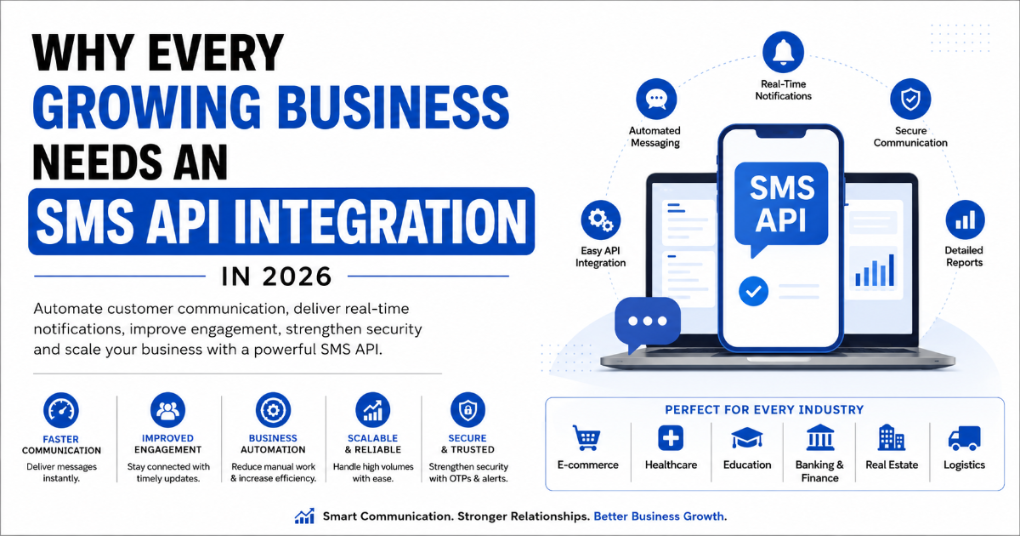
Why Every Growing Business Needs an SMS API Integration
As businesses expand, customer communication becomes more complex. Managing thousands of customer interactions manually is no longer practical. Customers expect instant notifications, real-time updates, secure authentication, and personalized communication across every touchpoint.
This is where SMS API Integration becomes essential.
An SMS API allows businesses to connect their applications, websites, CRM systems, ERP platforms, and mobile apps directly with an SMS gateway. This enables automated messaging for customer notifications, OTP verification, appointment reminders, payment alerts, order updates, and marketing campaigns—all without manual intervention.
For startups, SMEs, and large enterprises, SMS API integration is no longer a luxury—it's a key component of modern business communication.
What is an SMS API Integration?
An SMS API (Application Programming Interface) enables software applications to send and receive SMS messages automatically through a secure messaging platform.
Instead of manually sending text messages, businesses can integrate the API into their existing systems to automate communication based on customer actions.
For example:
A customer registers → Welcome SMS is sent automatically.
A customer places an order → Order confirmation SMS is delivered instantly.
A payment is successful → Payment receipt SMS is sent.
A customer logs in → OTP verification SMS is triggered.
An appointment is booked → Reminder SMS is scheduled automatically.
This seamless automation improves customer experience while reducing operational workload.
Why Growing Businesses Need SMS API Integration
1. Automate Customer Communication
As customer numbers grow, manual messaging becomes inefficient.
SMS API Integration automates:
Welcome messages
OTP verification
Order confirmations
Payment alerts
Delivery updates
Appointment reminders
Renewal notifications
Customer feedback requests
Automation ensures customers receive important information instantly.
2. Deliver Real-Time Notifications
Customers expect immediate updates regarding their interactions with your business.
Real-time SMS notifications help businesses communicate:
Order status
Shipping updates
Account activity
Payment confirmations
Service reminders
Event notifications
Fast communication builds trust and improves customer satisfaction.
3. Improve Customer Experience
Modern consumers value businesses that provide timely and relevant communication.
SMS API integration enables:
Personalized messages
Instant support updates
Secure verification
Faster service delivery
Consistent communication
These improvements enhance the overall customer journey.
4. Increase Business Efficiency
Automation reduces repetitive manual work.
Instead of sending messages individually, businesses can automate customer communication directly from their systems.
This allows employees to focus on:
Customer support
Sales
Business development
Strategic planning
5. Strengthen Business Security
SMS APIs are widely used for secure authentication.
Common security applications include:
OTP verification
Login authentication
Password reset
Transaction verification
Fraud alerts
These features help protect customer accounts and improve trust.
6. Scale Communication as Your Business Grows
Whether you send hundreds or millions of messages, SMS APIs are designed to handle growing communication needs.
Businesses can:
Manage high-volume messaging
Maintain fast delivery speeds
Schedule campaigns
Monitor delivery reports
Track message performance
Scalable communication supports long-term business growth.
Key Features of a Modern SMS API
A reliable SMS API should include:
Bulk SMS support
REST API integration
Secure authentication
High-speed delivery
Delivery reports
Campaign scheduling
Unicode message support
Multi-language messaging
Real-time analytics
Developer documentation
These features help businesses integrate messaging smoothly into their existing workflows.
Industries That Benefit from SMS API Integration
E-commerce
Order confirmations
Delivery updates
Cart recovery reminders
Promotional campaigns
Healthcare
Appointment reminders
Prescription refill alerts
Health check-up notifications
Education
Admission updates
Fee reminders
Exam schedules
Attendance notifications
Banking & Finance
OTP authentication
Transaction alerts
EMI reminders
Fraud notifications
Real Estate
Property inquiry follow-ups
Site visit confirmations
Project launch announcements
Logistics
Shipment tracking
Delivery notifications
Pickup confirmations
Benefits of SMS API Integration
Faster Communication
Deliver messages instantly to customers.
Improved Customer Engagement
Keep customers informed with timely updates.
Reduced Operational Costs
Automate repetitive messaging and reduce manual effort.
Better Customer Retention
Regular communication strengthens customer relationships.
Increased Productivity
Allow teams to focus on high-value business activities.
Reliable Message Delivery
Ensure important notifications reach customers quickly.
Best Practices for SMS API Integration
To maximize results:
Integrate with your CRM or ERP system.
Use permission-based messaging.
Personalize SMS content.
Secure API credentials.
Monitor delivery reports.
Test API functionality regularly.
Follow messaging regulations.
Analyze campaign performance.
These practices help businesses maintain reliable and effective communication.
Future of SMS API Integration
As technology evolves, SMS APIs are becoming smarter through AI and automation.
Future capabilities include:
AI-powered message personalization
Predictive customer communication
Omnichannel messaging
Smart campaign optimization
Real-time customer behavior analysis
Advanced API security
Deeper CRM integrations
Businesses adopting these innovations will be better equipped to meet customer expectations and stay competitive.
Choosing the Right Business Messaging Platform
When selecting an SMS API provider, consider:
High message delivery rates
Secure API infrastructure
Easy integration
Reliable uptime
Detailed reporting
Scalable messaging capabilities
Responsive technical support
Flexible API documentation
A dependable business messaging platform ensures smooth communication and supports long-term business growth.
Conclusion
SMS API Integration is no longer just a technical feature—it is a strategic investment for businesses looking to improve customer communication, automate operations, and scale efficiently. From sending OTPs and order confirmations to appointment reminders and marketing campaigns, an SMS API enables businesses to communicate faster, smarter, and more reliably.