
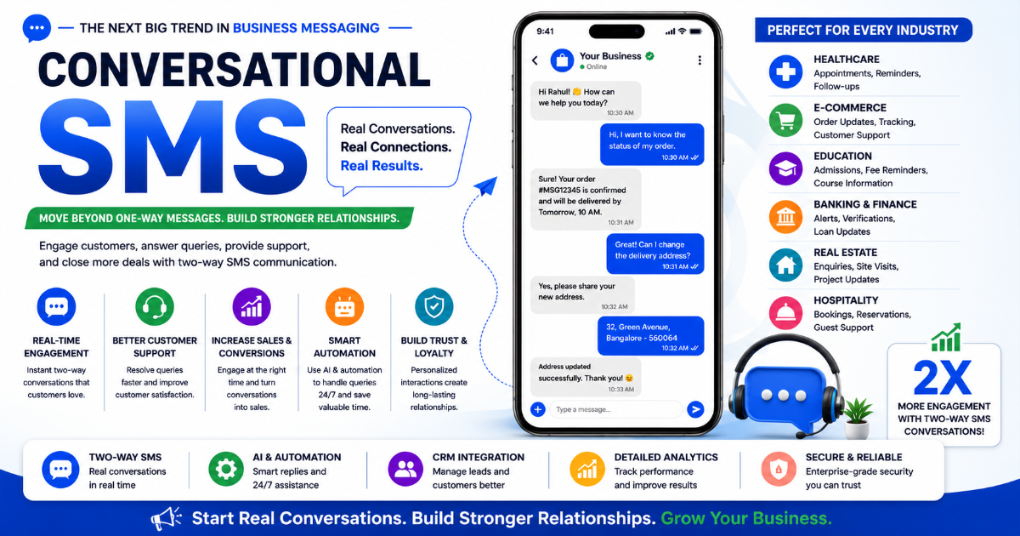
Customer communication is changing rapidly. Businesses are moving away from one-way promotional messages and embracing real conversations with their customers. Instead of simply sending notifications, companies now want customers to ask questions, confirm appointments, request support, and respond instantly.
This shift has given rise to Conversational SMS—one of the fastest-growing trends in business messaging.
Unlike traditional SMS campaigns that only broadcast information, Conversational SMS enables two-way communication between businesses and customers. It transforms SMS into an interactive experience that builds trust, strengthens relationships, and improves customer satisfaction.
For businesses looking to deliver faster service and create meaningful customer experiences, Conversational SMS is becoming an essential part of modern communication strategies.
What is Conversational SMS?
Conversational SMS is a two-way messaging solution that allows businesses and customers to exchange messages in real time.
Instead of only sending announcements, businesses can:
Answer customer questions
Confirm appointments
Process booking requests
Resolve support issues
Collect customer feedback
Share personalized recommendations
Handle service inquiries
Customers receive quick responses without downloading another application, making communication simple and convenient.
Why Businesses Are Switching to Conversational SMS
Modern customers expect immediate responses.
Whether they're checking an order, confirming a booking, or asking about a service, waiting hours for an email reply can create frustration.
Conversational SMS helps businesses:
Respond instantly
Improve customer satisfaction
Reduce support response times
Build stronger customer relationships
Increase customer trust
Fast communication creates better experiences and encourages repeat business.
Key Benefits of Conversational SMS
1. Real-Time Customer Engagement
Customers can interact with businesses instantly instead of waiting for email responses or support tickets.
Quick conversations improve customer confidence and keep them engaged.
2. Better Customer Support
Businesses can answer common questions through SMS, reducing call center workload while providing faster assistance.
Examples include:
Order status
Appointment confirmation
Delivery tracking
Product availability
Service requests
3. Higher Customer Satisfaction
Customers appreciate businesses that communicate quickly and personally.
Interactive SMS conversations create a smoother customer experience and improve brand loyalty.
4. Increased Sales Opportunities
Every customer conversation creates an opportunity to recommend products, answer buying questions, and guide customers toward completing a purchase.
Businesses can convert inquiries into sales more efficiently through conversational messaging.
5. Automated Yet Personal
By integrating AI and automation, businesses can answer frequently asked questions instantly while handing complex conversations to human support teams when needed.
This creates the perfect balance between automation and personalized service.
Industries Using Conversational SMS
Healthcare
Appointment scheduling
Prescription reminders
Patient follow-ups
E-commerce
Order tracking
Product inquiries
Return requests
Education
Admission support
Fee payment assistance
Course information
Banking & Finance
Transaction inquiries
Loan updates
Customer verification
Real Estate
Property inquiries
Site visit scheduling
Project updates
Hospitality
Booking confirmations
Reservation changes
Guest support
Conversational SMS vs Traditional SMS
FeatureTraditional SMSConversational SMSOne-Way MessagingYesNoTwo-Way ConversationsNoYesCustomer SupportLimitedExcellentReal-Time InteractionNoYesCustomer FeedbackBasicInteractiveAI IntegrationLimitedAdvancedPersonalizationModerateHigh
Best Practices
To maximize Conversational SMS performance:
Respond quickly to customer messages.
Use AI chatbots for common questions.
Personalize conversations whenever possible.
Keep responses clear and concise.
Integrate SMS with your CRM.
Monitor customer satisfaction.
Respect customer consent and privacy.
Future of Conversational SMS
The future of Conversational SMS includes:
AI-powered virtual assistants
Smart customer routing
Voice and SMS integration
Predictive messaging
CRM-powered personalization
Real-time analytics
Multilingual conversations
Businesses adopting these innovations will create faster, smarter, and more engaging customer experiences.
Why Businesses Need a Business Messaging Platform
A modern Business Messaging Platform provides everything required for conversational communication:
Two-Way SMS
Bulk SMS Campaigns
SMS API Integration
AI Automation
CRM Integration
Delivery Reports
Customer Analytics
Secure Messaging
Campaign Management
These tools help businesses manage conversations efficiently while improving customer satisfaction.
Conclusion
Customer expectations are evolving, and businesses need communication tools that support real conversations rather than one-way notifications. Conversational SMS enables organizations to engage customers instantly, provide faster support, and build stronger relationships through interactive messaging.