
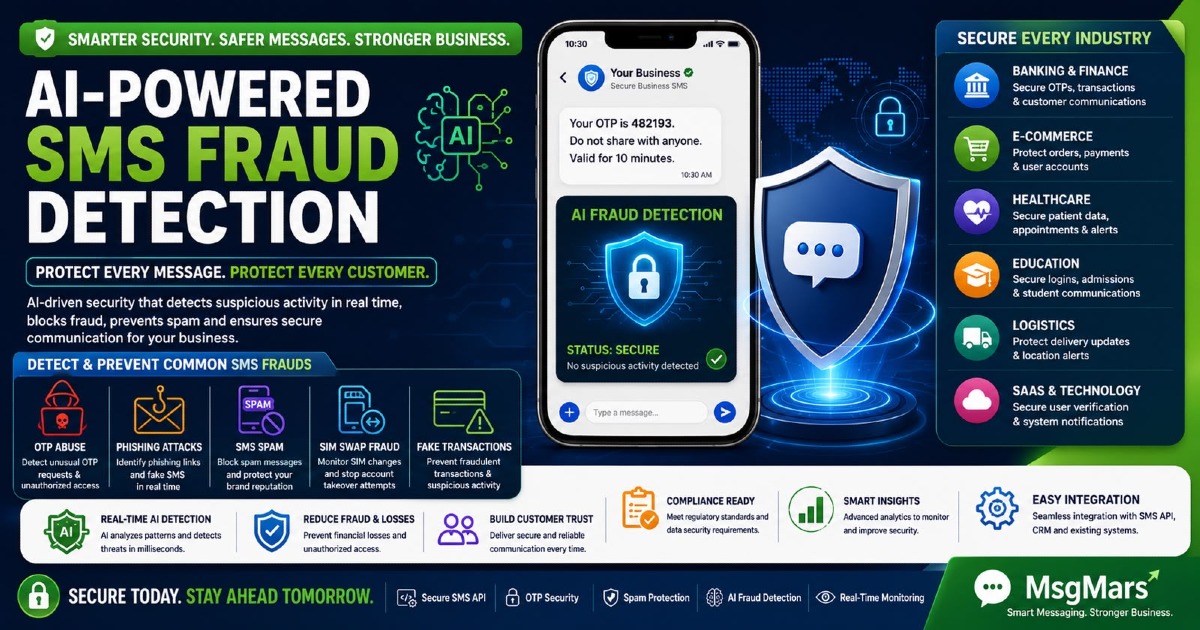
Digital communication has become essential for businesses, but it has also created new security challenges. Fraudsters continuously develop sophisticated techniques to exploit messaging systems through phishing, fake OTP requests, spam campaigns, and unauthorized transactions. These threats can damage customer trust, impact business operations, and lead to financial losses.
To stay ahead of cybercriminals, organizations are increasingly adopting AI-powered SMS fraud detection. By combining artificial intelligence with secure messaging infrastructure, businesses can identify suspicious activity in real time, prevent fraudulent SMS traffic, and protect customers from evolving threats.
For industries that rely on transactional messaging, AI is becoming a critical layer of security rather than an optional feature.
What Is AI-Powered SMS Fraud Detection?
AI-powered SMS fraud detection uses machine learning and intelligent algorithms to monitor messaging activity and identify suspicious patterns automatically.
Unlike traditional rule-based systems, AI continuously learns from customer behavior and messaging trends to detect unusual activity before it becomes a security incident.
Modern business messaging platforms can identify:
* Fake OTP requests
* SMS spam campaigns
* Account takeover attempts
* Phishing messages
* Unusual login activity
* High-risk messaging behavior
* Suspicious delivery patterns
This enables businesses to respond quickly while minimizing risks.
Why SMS Security Matters More Than Ever
Businesses use SMS for critical communication such as:
* One-Time Passwords (OTPs)
* Banking alerts
* Payment confirmations
* Login verification
* Order updates
* Appointment reminders
* Delivery notifications
If these messages are compromised, customer confidence and brand reputation can be affected. Strong SMS security helps ensure every message reaches the right recipient securely.
Common SMS Fraud Threats
OTP Abuse
Fraudsters repeatedly request verification codes to gain unauthorized access to customer accounts.
Phishing Messages
Attackers send fake SMS messages pretending to be trusted brands to steal sensitive information.
SMS Spam
Large volumes of unwanted promotional or malicious messages reduce customer trust and impact engagement.
SIM Swap Fraud
Criminals attempt to transfer a customer’s mobile number to another SIM card to intercept authentication messages.
Fake Transactions
Unauthorized payment requests and account activity notifications can confuse customers and increase financial risk.
How AI Detects SMS Fraud
1. Real-Time Monitoring
AI continuously monitors messaging traffic and flags unusual activity within seconds.
2. Behavioral Analysis
Machine learning analyzes customer behavior to identify patterns that differ from normal usage.
3. Risk Scoring
Each transaction or SMS request can be evaluated based on risk factors, allowing businesses to block suspicious activity automatically.
4. Intelligent Alerts
When unusual behavior is detected, security teams receive immediate notifications to investigate potential threats.
5. Continuous Learning
Unlike traditional security systems, AI improves over time by learning from new attack methods and customer interactions.
⸻
Benefits of AI-Powered SMS Fraud Detection
Stronger Customer Trust
Customers feel more confident using businesses that prioritize secure communication.
Reduced Financial Losses
Early detection helps prevent fraudulent transactions and unauthorized account access.
Improved Regulatory Compliance
Secure messaging practices support industry regulations and data protection requirements.
Better Business Continuity
Protecting messaging systems reduces disruptions caused by spam or malicious activity.
Enhanced Customer Experience
Customers receive secure, reliable notifications without unnecessary delays or interruptions.
Industries That Benefit
Banking & Financial Services
Secure OTP delivery, transaction verification, and fraud prevention.
E-commerce
Protect customer accounts, payment confirmations, and order notifications.
Healthcare
Safeguard appointment reminders, patient notifications, and secure communication.
Education
Secure student portals, admission verification, and academic notifications.
Logistics
Protect shipment updates and delivery verification messages.
SaaS & Technology
Strengthen account authentication and user verification.
Best Practices for Secure SMS Communication
To maximize SMS security:
* Use secure SMS APIs with authentication.
* Monitor messaging traffic continuously.
* Enable AI-based fraud detection.
* Limit repeated OTP requests.
* Educate customers about phishing attempts.
* Keep messaging platforms updated.
* Integrate SMS security with CRM and identity management systems.
Why Businesses Need a Secure Business Messaging Platform
A modern Business Messaging Platform provides advanced security features such as:
* AI-powered fraud detection
* Secure SMS API integration
* OTP authentication
* Spam filtering
* Real-time monitoring
* Delivery analytics
* Access control
* Transactional SMS management
These capabilities help businesses deliver reliable communication while protecting customer data.
Future of AI in SMS Security
The future of secure business messaging includes:
* Predictive fraud prevention
* AI-powered threat intelligence
* Adaptive authentication
* Intelligent spam detection
* Behavioral biometrics
* Automated security responses
* Advanced risk analysis
Businesses investing in these technologies will be better equipped to defend against emerging cyber threats.
Conclusion
As businesses continue to rely on SMS for customer communication and authentication, protecting messaging channels has become more important than ever. AI-powered SMS fraud detection helps organizations identify threats in real time, reduce fraudulent activity, and strengthen customer trust.